Black Magic Mushtaq Ali
BLACK MAGIC SPECIALIST ASTROLOGER
- MIYA MUSHTAQ ALI -
BLACK MAGIC SPECIALIST ASTROLOGER
- MIYA MUSHTAQ ALI -
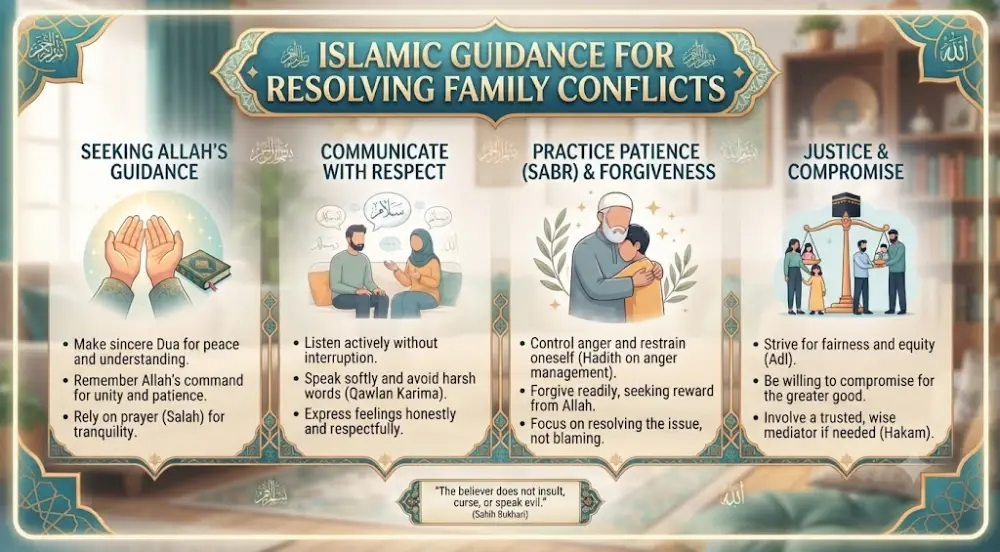
Family relationships are an important part of life, providing love, support, companionship, and a sense of belonging. However, disagreements and misunderstandings can arise even in close families. Differences in opinions, financial pressure, marital issues, generational gaps, and interference from relatives may sometimes create tension between family members. When conflicts continue without resolution, they can affect emotional well-being and weaken relationships.
Many people seek Islamic guidance for resolving family conflicts because they want to handle difficult situations in a way that reflects their faith and values. Islam emphasizes kindness, justice, patience, forgiveness, and respect for family relationships. By combining these principles with honest communication and practical problem-solving, families can work toward healthier relationships and a more peaceful home environment.
Before trying to resolve a disagreement, it is helpful to understand what caused it. Family conflicts rarely develop for just one reason. Sometimes, a small misunderstanding grows into a serious argument because people feel unheard or disrespected.
Common causes of family disagreements include:
Miscommunication between parents and children
Disagreements between spouses
Financial responsibilities and inheritance disputes
Differences in lifestyle, expectations, or personal values
Interference from relatives in private family matters
Jealousy, resentment, or unresolved past disagreements
Unequal household responsibilities
Lack of emotional support and understanding
Recognizing the underlying problem can help family members focus on solutions rather than blaming one another. It is important to listen to everyone's concerns fairly and avoid assuming that one person is entirely responsible for every disagreement.
Islam places considerable importance on maintaining family ties, treating relatives with kindness, and fulfilling responsibilities toward others. The Quran encourages justice, good conduct, and compassion in personal relationships.
Surah An-Nisa (4:36), for example, instructs believers to worship Allah and treat parents, relatives, and others with kindness. This teaching highlights the importance of respectful behavior and responsibility within families.
However, maintaining family relationships does not mean that people must accept abuse, intimidation, or injustice. Islamic principles also emphasize fairness and accountability. Family members should be treated with dignity, and disagreements should be addressed without humiliation or harm.
A balanced approach involves protecting family relationships where possible while recognizing everyone's rights, personal boundaries, and safety.
Patience, known as sabr, is an important value in Islam. When a disagreement becomes emotional, people may say things they later regret. Responding immediately in anger can make a manageable problem much more serious.
Taking time to calm down before continuing a difficult conversation can help prevent unnecessary arguments. It may be useful to pause, reflect on your words, and return to the discussion when everyone is ready to speak respectfully.
Patience does not mean ignoring a serious problem indefinitely. Instead, it means responding thoughtfully rather than allowing anger to control your decisions.
For example, if you disagree with a parent or sibling about an important family decision, try explaining your concerns calmly and giving the other person an opportunity to share their perspective.
Many family problems become worse because people do not communicate their feelings clearly. A person may feel ignored, while another may not realize that their words or actions have caused hurt.
Respectful communication can help reduce this distance. Try to discuss the specific issue rather than bringing up every disagreement from the past. Listen without interrupting, avoid insults, and explain your feelings without making personal attacks.
Instead of saying, "You never understand me," you might explain, "I feel upset when my concerns are not discussed."
This approach encourages a more constructive conversation. Both sides should have the opportunity to express themselves and suggest possible solutions.
Islamic values of kindness and good character can guide the way family members speak to one another, even when they strongly disagree.
Dua is an important part of Muslim spiritual life. During family difficulties, Muslims may ask Allah for patience, wisdom, guidance, and the ability to treat others fairly.
You can make dua in your own words, asking Allah to ease tensions, improve communication, and help family members make wise decisions.
One Quranic supplication that many Muslims recite is found in Surah Al-Furqan (25:74):
This supplication asks Allah to grant comfort through spouses and offspring and to make believers examples for the righteous.
Reciting and reflecting on this dua can be part of a personal devotional routine. It should not be treated as a guaranteed formula that will automatically resolve every disagreement. Family reconciliation also requires responsible actions, honest communication, and willingness to address the underlying problems.
Forgiveness can help family members move forward after hurtful experiences. Holding on to anger for a long time may deepen resentment and make future conversations more difficult.
Islam encourages forgiveness and good conduct, while also recognizing the importance of justice. Forgiveness is a personal process and should not be forced upon someone who has experienced serious harm.
If a family member apologizes sincerely and makes a genuine effort to change, forgiveness may create an opportunity to rebuild trust. However, restoring a relationship may take time, especially when the same problem has occurred repeatedly.
It is also possible to forgive someone while maintaining appropriate boundaries. Healthy reconciliation requires accountability and respect, not simply forgetting that a problem occurred.
Marital disagreements can affect the entire household, especially when children or extended family members become involved. Differences about finances, responsibilities, parenting, or relationships with relatives may create tension between spouses.
Both partners should have an opportunity to explain their concerns and discuss practical changes. Setting aside regular time for calm conversations can help couples address small problems before they become larger disputes.
When communication repeatedly breaks down, a qualified marriage counsellor may help identify unhealthy patterns and develop better ways of resolving disagreements.
For couples who value religious guidance, consulting a knowledgeable and trustworthy Islamic scholar may also help clarify questions about marital responsibilities and reconciliation.
Neither partner should be pressured into accepting mistreatment. If a relationship involves abuse, threats, or coercive control, safety and appropriate professional support should take priority over attempts at reconciliation.
Differences between parents and children can arise because of changing expectations, education, careers, marriage decisions, or personal independence.
Parents may worry about their children's future, while children may feel that their choices are not being understood. These differences can become particularly difficult when discussions involve strong emotions or cultural expectations.
Parents can help by listening to their children's concerns without immediately dismissing them. Children, in turn, can communicate their views respectfully while recognizing the care and responsibilities their parents may be expressing.
Mutual understanding does not require everyone to agree on every issue. A healthier relationship allows family members to express different opinions while maintaining respect and avoiding unnecessary hostility.
Some family disputes become too complicated for the people involved to resolve independently. In these circumstances, a neutral mediator may help everyone communicate more effectively.
Islamic tradition recognizes the value of mediation in marital disputes. Surah An-Nisa (4:35) discusses appointing arbiters from both families when serious discord occurs between spouses, with the aim of reconciliation.
In modern situations, a trusted religious scholar, qualified family counsellor, or impartial mediator may help clarify concerns and identify possible solutions.
A suitable mediator should listen fairly, respect confidentiality, and avoid taking advantage of vulnerable family members. Mediation should never be used to pressure someone to remain in an unsafe situation or surrender their rights.
Sharing private family disagreements with many relatives can sometimes make conflicts worse. When people hear incomplete information, they may take sides, spread rumours, or increase misunderstandings.
It is usually better to discuss sensitive matters with the people directly involved or seek help from a carefully chosen, trustworthy adviser.
Family members should avoid making accusations without evidence, using private information to embarrass someone, or encouraging others to retaliate.
Maintaining privacy does not mean concealing abuse or serious wrongdoing. If someone is being harmed, seeking appropriate support from trusted people or relevant authorities may be necessary.
The goal is to address the problem responsibly without creating additional conflict.
Resolving a particular disagreement is only one part of maintaining healthy family relationships. Everyday actions can also strengthen trust and understanding.
Consider these simple habits:
Spend quality time together without distractions.
Express appreciation for one another's efforts.
Share household responsibilities fairly.
Discuss financial decisions openly and responsibly.
Respect reasonable differences in personal opinions.
Apologize when your words or actions cause harm.
Make time for prayer and positive family activities if these are meaningful to everyone.
Small, consistent changes can improve the atmosphere at home. Family harmony develops through ongoing effort rather than one conversation or a single act of forgiveness.
Not every family conflict can be resolved through patience or informal discussion alone. Long-standing disputes, severe emotional distress, financial exploitation, domestic violence, and other serious issues may require specialized help.
A qualified counsellor can help family members understand communication patterns and develop healthier ways to handle disagreements. Legal advice may be appropriate for matters involving inheritance, financial rights, separation, or other legal concerns.
If there is an immediate threat or risk of violence, seek a safe place and contact appropriate local emergency services or support organizations.
Seeking help is not a failure of faith. It can be a responsible step toward protecting yourself and finding a fair resolution.
Islamic guidance for resolving family conflicts emphasizes patience, justice, compassion, respectful communication, and maintaining family ties wherever possible. Dua and prayer may provide spiritual comfort, while reflection on Quranic teachings can encourage people to respond to disagreements with greater wisdom.
At the same time, lasting improvement requires practical steps. Family members need to listen to one another, acknowledge their responsibilities, respect personal boundaries, and address the actual causes of conflict. When necessary, mediation, counselling, or professional advice can help resolve problems that feel too difficult to manage alone.
Family harmony does not mean avoiding every disagreement. It means learning how to handle differences fairly, protect each person's dignity, and work toward solutions that support everyone's well-being. By combining faith with thoughtful action, families can create healthier relationships and move toward a more peaceful home environment.
Fill the form below and our expert will contact you shortly.