Black Magic Mushtaq Ali
BLACK MAGIC SPECIALIST ASTROLOGER
- MIYA MUSHTAQ ALI -
BLACK MAGIC SPECIALIST ASTROLOGER
- MIYA MUSHTAQ ALI -
Marriage is a meaningful relationship built on love, trust, commitment, and mutual understanding. In Islam, marriage is also regarded as a partnership in which spouses are encouraged to treat one another with kindness, fairness, and respect. However, even strong relationships can experience difficult periods. Communication problems, financial pressure, family interference, differences in expectations, and emotional distance can create challenges for couples.
When these problems continue without resolution, spouses may feel frustrated, lonely, or uncertain about their future together. Many people seek Islamic advice for couples facing marriage difficulties because they want guidance that respects their faith while helping them improve their relationship. By combining Islamic values with practical communication skills and appropriate professional support, couples can work toward a healthier and more peaceful marriage.
Marriage problems rarely develop overnight. In many cases, small disagreements remain unresolved until they become larger sources of frustration. Understanding the underlying causes can help couples decide how to move forward.
Some common challenges include:
Frequent arguments and misunderstandings
Lack of emotional intimacy or quality time
Financial disagreements and household responsibilities
Interference from extended family members
Loss of trust or difficulties with honesty
Differences in parenting styles and future plans
Unmet expectations and poor communication
Stress related to work, health, or other life circumstances
Every couple has a different experience, so there is no single solution that works for every relationship. The first step is to recognize the problem honestly and understand how both partners are affected.
Islam emphasizes compassion, mutual respect, and responsibility within marriage. The Quran describes marriage as a relationship in which spouses can find tranquillity and highlights affection and mercy between them.
Surah Ar-Rum (30:21) is commonly referenced when discussing the importance of tranquillity, love, and mercy between spouses. These values provide a meaningful foundation for considering how partners should treat each other during both peaceful and difficult periods.
Islamic teachings also emphasize justice and good character. Marriage should not be a relationship in which one person consistently humiliates, threatens, or controls the other. Both spouses deserve dignity and fair treatment.
Understanding these principles can help couples reflect on their behavior, identify areas for improvement, and make decisions that support their well-being and responsibilities.
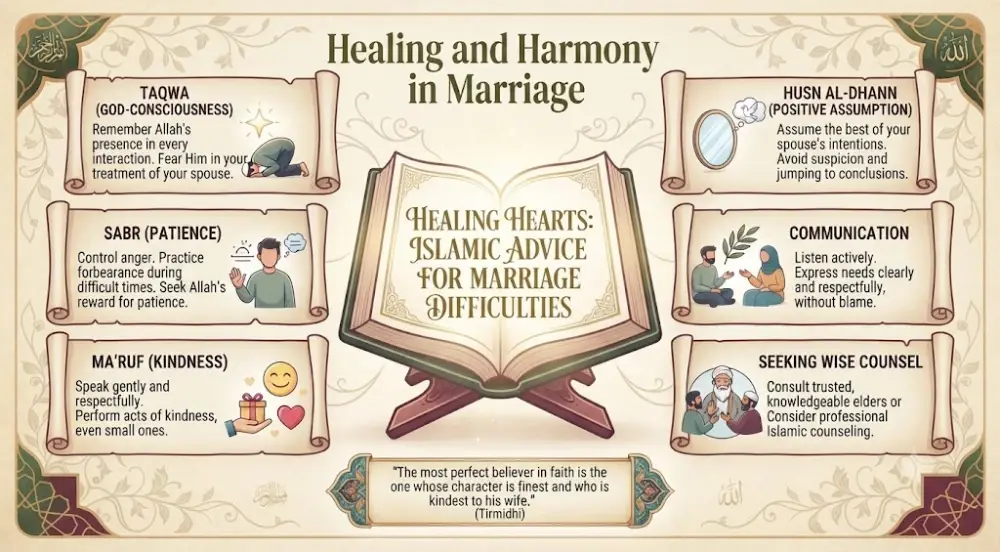
Communication is one of the most important elements of a healthy marriage. When partners stop sharing their feelings or listening to one another, misunderstandings can develop and emotional distance may increase.
During disagreements, try to discuss one issue at a time. Avoid insults, shouting, and bringing up unrelated mistakes from the past. Allow your spouse to explain their concerns without interruption, and express your own feelings clearly.
For example, instead of saying, "You never care about me," explain which actions make you feel neglected and what changes would help you feel more supported.
Respectful communication does not mean that you must agree on everything. It means that both partners can express their views without fear of humiliation or retaliation.
Couples may also benefit from scheduling regular time to discuss household responsibilities, finances, personal goals, and relationship concerns before frustration builds.
Patience, known as sabr, is an important value in Islam. Marriage brings together two people with different personalities, experiences, and expectations. Learning to understand these differences takes time and effort.
When emotions are strong, taking a short break before continuing a conversation can prevent hurtful reactions. Reflect on what your spouse is saying and consider whether there may be a misunderstanding.
Patience does not mean ignoring repeated problems or accepting mistreatment. Instead, it involves responding thoughtfully while taking appropriate steps to address the situation.
Both partners should be willing to recognize their mistakes and make reasonable changes. A marriage becomes stronger when patience is accompanied by accountability, honesty, and mutual effort.
Dua is an important part of Muslim spiritual life. Couples experiencing difficulties may ask Allah for guidance, patience, understanding, and the strength to make wise decisions.
One Quranic supplication found in Surah Al-Furqan (25:74) asks Allah for comfort through spouses and offspring and for the ability to be examples for the righteous.
The supplication begins:
Rabbana hab lana min azwajina wa dhurriyyatina qurrata a'yun.
Its meaning includes asking Allah to grant comfort through one's spouse and children.
Couples can include this dua in their personal devotional routines and reflect on how they can contribute to a more peaceful home. Prayer may provide comfort and encourage thoughtful decision-making, but it should not be treated as a guaranteed method for changing a spouse's behavior or resolving every disagreement.
Alongside dua, couples should take practical steps to address the causes of their difficulties.
Trust can be damaged by dishonesty, broken promises, secrecy, or actions that cause emotional harm. Once trust has been affected, restoring it often requires time and consistent effort.
The partner responsible for the harm should acknowledge the impact of their actions rather than dismissing the other person's feelings. Both spouses should discuss what rebuilding trust would realistically involve.
This might include greater transparency, clearer expectations, honest conversations, or professional support.
It is important to recognize that trust cannot be restored through promises alone. Consistent behavior over time is often necessary.
The partner who has been hurt also needs space to decide what they need to feel secure. Reconciliation should not be forced, and neither spouse should be pressured into pretending that a serious problem has disappeared.
Financial pressure is a common source of tension in marriage. Disagreements may arise over spending habits, savings, debt, household expenses, or financial support for relatives.
A practical first step is to review the household budget together. Discuss essential expenses, financial goals, and responsibilities openly. Avoid blaming one another for every financial difficulty, especially when circumstances are beyond either partner's control.
Both spouses should have a reasonable opportunity to understand the family's financial situation and discuss important decisions.
Islamic teachings address financial responsibilities within marriage, but individual circumstances can vary. Couples who need clarification about religious obligations, maintenance, or financial rights may wish to consult a knowledgeable Islamic scholar or qualified legal professional.
Open communication and realistic planning can reduce uncertainty and help couples approach financial problems as a shared challenge.
Extended family relationships can provide valuable support, but disagreements may arise when relatives become heavily involved in private marital decisions.
Conflicts may concern living arrangements, parenting, household duties, financial matters, or family traditions. Couples should discuss these issues privately and agree on reasonable boundaries.
It is possible to treat parents and relatives with respect while making appropriate decisions about one's own marriage. For example, spouses can agree to discuss major decisions together before sharing them with family members.
When a dispute becomes difficult to manage, a trusted and impartial mediator may help everyone communicate more constructively.
However, family involvement should not be used to pressure someone into accepting unfair treatment or remaining in an unsafe relationship.
Forgiveness can help couples move forward after disagreements and hurtful experiences. Holding on to resentment may make it more difficult to rebuild emotional closeness.
Islam encourages forgiveness and good character, while also emphasizing justice and accountability. Forgiveness does not require denying that harm occurred or allowing the same behavior to continue.
If a spouse apologizes sincerely, takes responsibility, and demonstrates meaningful change, forgiveness may help create an opportunity for reconciliation.
However, rebuilding a marriage requires more than one apology. Couples may need to discuss what went wrong, identify patterns that caused the conflict, and agree on changes that can prevent similar problems.
Healthy forgiveness should support emotional healing and mutual respect rather than become a reason to ignore repeated mistreatment.
Sometimes, couples try repeatedly to resolve their problems but find themselves returning to the same arguments. In these situations, outside guidance may help them understand their relationship more clearly.
A trusted Islamic scholar can provide religious guidance concerning marital responsibilities, reconciliation, and questions about Islamic teachings. A qualified marriage counsellor can help couples improve communication, recognize unhealthy patterns, and explore practical solutions.
These forms of support can complement one another when appropriate.
Surah An-Nisa (4:35) discusses appointing arbiters from both families when serious discord occurs between spouses, with reconciliation as the aim. This passage is often referenced when discussing mediation in marital disputes.
Any mediation process should be fair and voluntary. If a relationship involves violence, threats, or coercive control, prioritize safety and seek appropriate individual support rather than relying on joint counselling alone.
Work, parenting, financial responsibilities, and everyday pressures can reduce the time spouses spend connecting with one another. Over time, this may contribute to emotional distance.
Couples can make small but meaningful efforts to reconnect. These may include eating meals together, taking walks, sharing daily experiences, or setting aside time to talk without distractions.
Expressing appreciation also matters. A sincere thank-you, a thoughtful gesture, or recognition of a partner's efforts can help each person feel valued.
Quality time does not have to involve expensive activities or elaborate plans. What matters is making a consistent effort to maintain emotional closeness and show genuine interest in each other's lives.
Not every marriage problem can be resolved through patience and communication alone. Persistent emotional distress, repeated betrayal, serious financial disputes, or ongoing conflict may require specialized support.
A qualified counsellor can help couples evaluate their options and determine whether reconciliation is realistic. Legal advice may also be necessary when questions arise about separation, divorce, financial rights, or child-related arrangements.
If there is abuse or an immediate threat to safety, seek help from trusted support services or appropriate local authorities. No one should be expected to endure harm to prove their faith or commitment to marriage.
Seeking assistance can be a responsible step toward protecting personal well-being and making informed decisions.
Islamic advice for couples facing marriage difficulties centers on compassion, patience, justice, honest communication, and mutual responsibility. Quranic teachings can provide a foundation for reflecting on how spouses treat one another and how they approach disagreements.
Dua and prayer may offer spiritual comfort, while practical actions such as rebuilding trust, managing finances, setting family boundaries, and spending quality time together can help address the causes of marital stress.
When problems continue, consulting a trusted Islamic scholar, qualified marriage counsellor, or appropriate professional may provide further guidance. Couples should approach reconciliation with honesty and mutual willingness rather than pressure or unrealistic promises.
A healthy marriage does not require two people to agree on everything. It requires both partners to treat each other with dignity, address differences fairly, and make thoughtful decisions about their future. By combining faith with practical effort, couples can work toward greater understanding, emotional stability, and a more respectful relationship.
Fill the form below and our expert will contact you shortly.