
Black Magic Mushtaq Ali
BLACK MAGIC SPECIALIST ASTROLOGER
- MIYA MUSHTAQ ALI -
BLACK MAGIC SPECIALIST ASTROLOGER
- MIYA MUSHTAQ ALI -
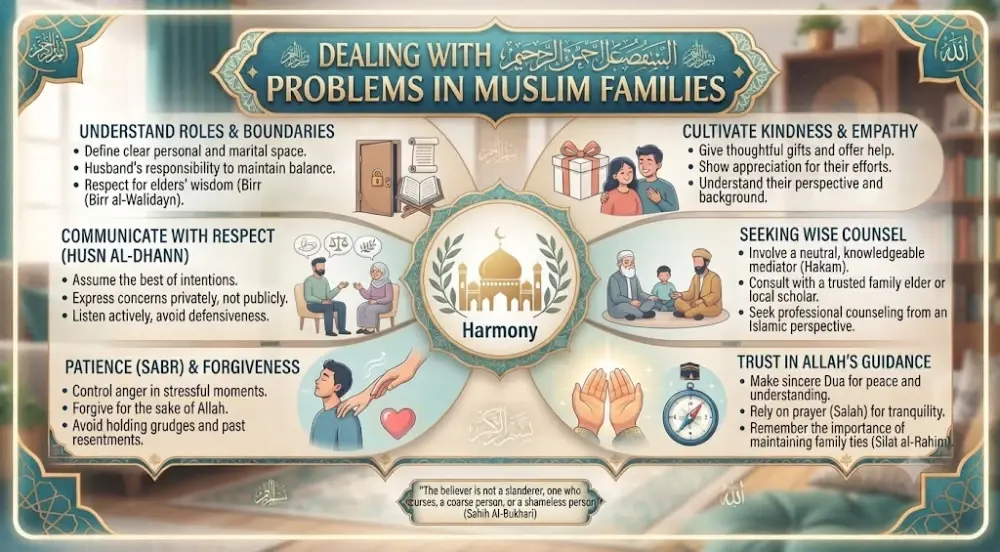
Marriage brings two people together, but it can also connect two families with different traditions, expectations, and ways of life. While these relationships can provide love and support, disagreements with in-laws may sometimes create stress between spouses. Differences in household responsibilities, privacy, financial decisions, parenting, and family traditions can lead to misunderstandings that affect a couple's relationship.
Many people search for advice about dealing with in-law problems in Muslim families because they want to maintain family relationships while protecting their marriage and personal well-being. Islamic values emphasize kindness, justice, respect, and good character. Applying these principles alongside clear communication and healthy boundaries can help families address disagreements constructively.
In-law conflicts can develop for many reasons. Sometimes, expectations about how a married couple should live differ between generations. In other situations, family members may struggle to adjust to changing responsibilities after a son or daughter gets married.
Common sources of tension include:
Interference in private marital decisions
Disagreements about household responsibilities
Pressure to follow particular family traditions
Conflicts about finances or financial support
Differences in parenting styles
Comparisons between a daughter-in-law and other family members
Concerns about privacy and personal independence
Misunderstandings between spouses and extended relatives
Not every disagreement indicates that a family relationship is unhealthy. Differences can often be resolved through calm discussion and mutual understanding. However, repeated criticism, disrespect, or controlling behavior may require clearer boundaries and additional support.
Understanding the specific problem is the first step toward finding a fair solution.
Islam places importance on good character, kindness toward relatives, justice, and fulfilling responsibilities within marriage and family life. The Quran encourages believers to treat others with fairness and kindness, including parents and relatives.
At the same time, respect should not be confused with allowing someone to control every aspect of another person's life. Family members have responsibilities toward one another, but they should also avoid injustice, humiliation, and unnecessary interference.
Muslim families may have different cultural traditions regarding living arrangements, family gatherings, and household responsibilities. These customs can be meaningful, but cultural expectations should not automatically be treated as religious obligations.
When a disagreement involves religious responsibilities, it may help to consult a knowledgeable and trustworthy Islamic scholar who can explain the relevant teachings in context.
Communication is one of the most important ways to prevent small disagreements from becoming serious family conflicts. When people feel ignored or misunderstood, they may become defensive or respond with anger.
If you are experiencing problems with your mother-in-law, father-in-law, or another relative, try to discuss the issue calmly and respectfully. Focus on the specific behavior that is causing difficulty rather than criticizing the person's character.
For example, if a relative frequently enters your private space without asking, explain that you appreciate the family relationship but need advance notice to maintain privacy.
Use clear, polite language and allow the other person to explain their perspective. Listening does not mean you must agree with everything they say. It simply creates an opportunity for both sides to understand the problem.
Healthy boundaries help couples maintain a stable relationship while remaining connected to their extended families. They clarify which decisions belong to the couple and how relatives can participate in family life respectfully.
Boundaries may involve privacy, visits, finances, household responsibilities, childcare, or personal decisions. For example, spouses may agree that major financial choices will be discussed privately before they are shared with relatives.
In Muslim families, setting boundaries can be approached with kindness and consideration. The aim is not necessarily to create distance from parents or relatives, but to prevent repeated misunderstandings and protect the couple's ability to make decisions together.
Boundaries work best when they are clear, reasonable, and consistently maintained. Both spouses should discuss them together instead of expecting one partner to manage every disagreement alone.
When in-law problems arise, spouses may feel caught between their partner and their parents. This can become especially stressful when each person expects immediate loyalty or support.
A healthy marriage requires honest communication and a willingness to understand each other's concerns. Couples should discuss family disagreements privately rather than arguing about them in front of relatives.
If a husband or wife feels hurt by a family member's behavior, the other partner should listen carefully instead of dismissing the concern. At the same time, both partners should avoid making unfair accusations or escalating the conflict.
It may help to agree on a shared response to recurring problems. For instance, if a relative criticizes private marital decisions, the couple can politely explain that they will make those decisions together.
Supporting your spouse does not require treating your parents or in-laws disrespectfully. It means addressing the problem fairly while recognizing the needs and dignity of everyone involved.
Disagreements between mothers-in-law and daughters-in-law can develop when expectations about household roles, family traditions, or decision-making differ.
A mother-in-law may feel that familiar family routines are changing, while a daughter-in-law may feel pressured to meet expectations that were never clearly discussed. Both may experience frustration when they believe their efforts are not appreciated.
Building a healthier relationship begins with mutual respect. A daughter-in-law can acknowledge the family's traditions while communicating her own preferences respectfully. A mother-in-law can offer advice without expecting every suggestion to be followed.
Comparisons, repeated criticism, and involving other relatives in private disagreements can increase tension. It is usually more helpful to address concerns directly and calmly.
A good relationship does not require identical opinions. It requires an understanding that different generations may have different preferences and that these differences can be managed without personal attacks.
Money can become a sensitive issue in extended families. Disputes may involve household expenses, support for parents, shared property, gifts, loans, or expectations about a couple's income.
Financial misunderstandings are easier to manage when expectations are discussed openly. Spouses should agree on a realistic budget, identify their financial responsibilities, and discuss what support they can reasonably provide to relatives.
It is important not to make promises that create financial hardship or to use money as a way to control another family member.
When a dispute concerns inheritance, ownership, or financial rights, consider obtaining qualified legal advice. If religious questions arise about financial responsibilities, consult a knowledgeable Islamic scholar rather than relying solely on family assumptions.
Clear agreements can prevent resentment and reduce the likelihood that financial problems will damage family relationships.
Patience, known as sabr, is an important Islamic value. During family disagreements, patience can help people avoid reacting impulsively and saying hurtful things.
However, patience does not mean that a person must silently accept ongoing humiliation, threats, or mistreatment. It is possible to remain respectful while clearly explaining that certain behavior is unacceptable.
If a relative repeatedly makes hurtful comments, you may choose to limit conversations about sensitive subjects or reduce contact in situations where conflict is likely. When appropriate, a trusted mediator can help family members discuss the issue.
Forgiveness may help relationships recover, but rebuilding trust often requires changed behavior. A sincere apology and consistent respect are more meaningful than repeated promises without improvement.
For many Muslims, prayer and dua provide comfort during difficult family situations. You can ask Allah for patience, wisdom, fairness, and guidance in handling disagreements with relatives.
One Quranic supplication that many Muslims recite is found in Surah Al-Furqan (25:74), which asks Allah to grant comfort through spouses and offspring and to make believers examples for the righteous.
Reflecting on this supplication can encourage people to consider what they can do to support a peaceful home. Regular salah, sincere dua, and reading the Quran may also help believers approach family challenges with greater thoughtfulness.
Spiritual practices should not be treated as guaranteed methods for changing another person's behavior. They can complement practical steps such as respectful communication, setting boundaries, and seeking appropriate advice.
If you need guidance about Islamic duties toward parents, spouses, or other relatives, consider speaking with a trusted scholar who understands the circumstances of your situation.
When a disagreement occurs, sharing private details with numerous relatives can sometimes make the situation worse. Different people may hear incomplete information and unintentionally spread misunderstandings.
It is usually better to speak directly with the person involved, when it is safe and appropriate, or seek help from one neutral and trustworthy adviser.
Avoid using children as messengers, asking relatives to take sides, or sharing private marital information to embarrass someone. These actions can deepen divisions and make reconciliation more difficult.
There is an important distinction between gossip and seeking help. If you are experiencing serious mistreatment, speaking confidentially with a counsellor, trusted person, religious adviser, or relevant authority may be necessary.
The goal is to address the problem responsibly without increasing unnecessary hostility.
Some disagreements continue despite repeated attempts to resolve them. In such cases, an impartial mediator or qualified family counsellor may help everyone express their concerns and explore possible solutions.
A mediator can help identify misunderstandings, clarify expectations, and encourage respectful communication. If religious questions are involved, an experienced Islamic scholar may provide additional context about family responsibilities and ethical conduct.
Choose someone who listens fairly and respects confidentiality. Avoid advisers who automatically blame one person, encourage revenge, or pressure someone to tolerate harmful behavior.
Mediation is most appropriate when participants can speak freely and safely. If there is domestic abuse, intimidation, or a risk of violence, individual support and safety planning may be more appropriate than joint discussions.
Ongoing conflict with in-laws can affect sleep, concentration, emotional health, and the quality of a marriage. Looking after your well-being is therefore an important part of managing the situation.
Make time for activities that help you relax, maintain supportive friendships, and discuss your concerns with someone trustworthy. You and your spouse can also set aside time together without allowing every conversation to revolve around family disagreements.
If stress becomes overwhelming, a qualified mental health professional may help you develop coping strategies and make decisions more confidently.
Where there are threats, physical violence, coercive control, or serious harassment, prioritize safety and seek appropriate local support. Maintaining family harmony should never require putting yourself or your children at risk.
Dealing with in-law problems in Muslim families can be challenging, particularly when marriage, cultural traditions, and extended family expectations overlap. However, many disagreements can become more manageable through patience, respectful communication, clear boundaries, and a willingness to understand different perspectives.
Islamic values encourage kindness, justice, and good character, but they should not be used to justify humiliation or mistreatment. Both spouses should work together to protect their marriage while treating parents and relatives fairly.
When communication is not enough, trusted religious guidance, mediation, or professional counselling may provide additional support. The most important goal is not to avoid every disagreement but to handle differences in a way that protects dignity, personal well-being, and healthy family relationships.
By combining faith with practical action, Muslim families can work toward greater understanding and create a more respectful and peaceful home environment.
Fill the form below and our expert will contact you shortly.