
Black Magic Mushtaq Ali
BLACK MAGIC SPECIALIST ASTROLOGER
- MIYA MUSHTAQ ALI -
BLACK MAGIC SPECIALIST ASTROLOGER
- MIYA MUSHTAQ ALI -
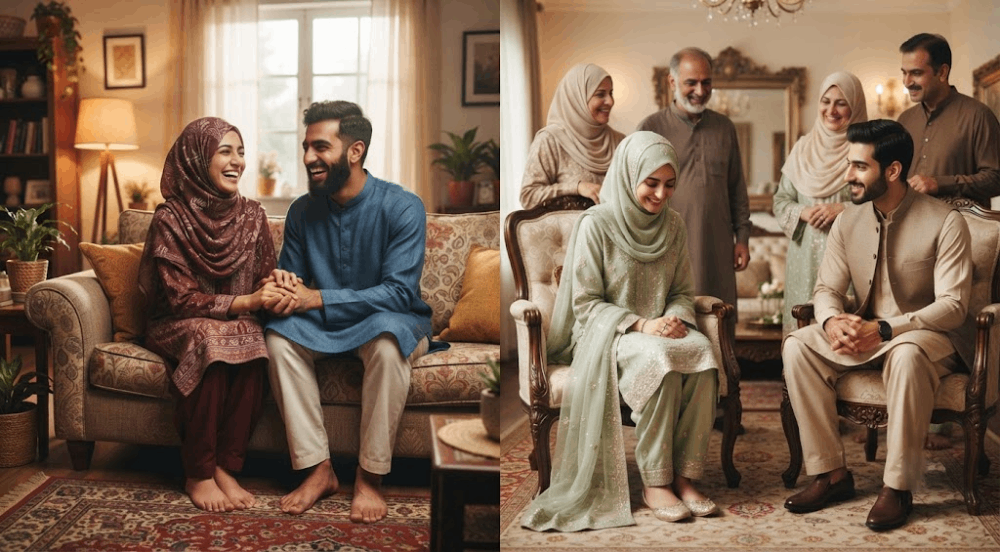
Marriage is an important part of life in Muslim families, bringing two individuals together while creating a bond between families, traditions, and shared values. When discussing love marriage vs. arranged marriage in Muslim families, people often have different opinions based on their upbringing, cultural traditions, religious understanding, and personal experiences. Some believe that choosing a life partner through love and mutual understanding creates a stronger relationship, while others prefer arranged marriage because it allows families to participate in the decision-making process.
In Islam, marriage is a meaningful commitment built on mutual respect, compassion, trust, responsibility, and understanding. Both love marriage and arranged marriage can lead to a happy and successful married life when the individuals involved make informed decisions and respect Islamic principles.
Understanding the differences between these two approaches can help individuals and families make thoughtful choices about marriage without unnecessary pressure or misunderstandings.
Love marriage occurs when two individuals develop romantic feelings for each other and decide to marry based on their mutual affection, compatibility, and commitment. In Muslim families, this decision may involve additional considerations, such as seeking parental approval, understanding religious responsibilities, and ensuring that the relationship follows Islamic teachings.
Many Muslim couples develop feelings for each other through education, professional environments, family connections, or other appropriate social interactions. Once they decide to get married, they may approach their parents or guardians to discuss their intentions and seek support.
One of the main characteristics of love marriage is that the individuals generally have some prior understanding of each other's personalities, interests, expectations, and future goals. This familiarity can help them discuss important matters before marriage.
However, love alone does not guarantee a successful relationship. Couples must also consider religious values, financial responsibilities, communication styles, family expectations, and their ability to resolve disagreements respectfully.
Arranged marriage is a process in which families, relatives, or trusted community members help individuals find suitable marriage partners. Parents may introduce potential matches based on family background, religious values, education, character, lifestyle, and compatibility.
In many Muslim households, arranged marriage remains a familiar tradition because marriage is viewed as a relationship that connects not only two individuals but also their families. Parents often participate because they want their children to find partners who share similar values and are prepared for long-term commitment.
However, arranged marriage does not necessarily mean that parents make every decision. In a healthy arrangement, both individuals have an opportunity to meet, communicate appropriately, ask questions, and decide whether they wish to proceed.
Consent is essential in an Islamic marriage. Family involvement should support the individuals getting married rather than replace their personal choice. A marriage decision made under threats, force, or severe pressure is different from a mutually accepted family arrangement.
Arranged marriage can provide a supportive starting point, but compatibility, mutual understanding, and respect must develop between the couple.
When comparing love marriage and arranged marriage in Muslim families, it is important to distinguish Islamic principles from cultural traditions.
Islam does not make family-arranged introductions the only acceptable way to find a spouse. Nor does the existence of romantic feelings automatically establish that a marriage is suitable. What matters includes lawful conduct, genuine consent, good character, mutual responsibilities, and the intention to build a respectful marital relationship.
The Quran describes marriage as a source of tranquility, affection, and mercy between spouses. These values provide a meaningful foundation for understanding what makes a marriage healthy.
Islamic teachings also emphasize the importance of treating a spouse with kindness and fulfilling marital responsibilities. Families may offer advice and support, but their involvement should not eliminate the consent of the people entering the marriage.
For individuals with questions about specific religious rulings, consulting a knowledgeable and trusted Islamic scholar can help clarify matters according to their circumstances and school of thought.
Although both approaches can lead to a successful marriage, they often differ in how couples meet and make their decisions.
In love marriage, individuals usually identify a potential partner themselves after developing an emotional connection. They may already understand each other's habits, communication styles, and personal preferences.
In arranged marriage, families or trusted intermediaries introduce potential partners. The individuals then assess compatibility and decide whether they want to move forward.
Neither method automatically guarantees a better choice. A thoughtful decision requires looking beyond attraction or family reputation and considering long-term compatibility.
Family participation is often a significant consideration in Muslim marriages.
In arranged marriage, families may be involved from the beginning, helping discuss expectations, background, and practical arrangements. This can make communication between families easier.
In love marriage, couples may need to introduce their relationship to their families and explain why they believe the match is appropriate. Differences in culture, community, financial circumstances, or family expectations can sometimes create disagreements.
Open communication and patience can help families understand each other's concerns without turning the marriage decision into a conflict.
Love marriage may begin with an established emotional bond. Couples may feel comfortable discussing their feelings, preferences, and expectations because they already know each other to some extent.
In arranged marriage, an emotional connection may develop gradually as the couple communicates and spends time understanding each other within appropriate boundaries.
Both experiences can be positive. Initial attraction does not guarantee lasting happiness, and a relationship that begins through a family introduction can develop deep affection over time.
Compatibility is essential regardless of how a couple meets.
Muslim couples may wish to discuss religious practices, family responsibilities, career plans, financial management, children, living arrangements, and expectations concerning extended family.
Love marriage can offer the advantage of prior familiarity, but couples should avoid assuming that they understand everything about each other.
Arranged marriage can provide an opportunity to discuss compatibility systematically before making a commitment. However, families should not rely exclusively on education, income, social standing, or family background when evaluating a potential partner.
Love marriage often involves greater individual initiative because the couple begins the process independently.
Arranged marriage may involve more family participation, which can be helpful when advice is constructive and the individuals retain control over their decisions.
The healthiest approach balances personal choice with thoughtful guidance. Adults should be able to express their preferences, ask questions, and decline a proposal without fear of punishment or humiliation.
Love marriage can offer several potential benefits when the relationship is built on honesty, responsibility, and shared values.
Better prior understanding: Couples may already know each other's communication styles, interests, and personalities.
Emotional familiarity: An existing emotional connection can help couples feel comfortable discussing their expectations and concerns.
Personal choice: Individuals can select a partner based on their own understanding of compatibility rather than relying entirely on family preferences.
Shared future goals: Couples who have discussed their ambitions before marriage may be better prepared to plan their future together.
Opportunity for open communication: A healthy relationship can encourage honest discussions about important subjects before marriage.
Nevertheless, couples should not ignore warning signs simply because they are emotionally attached. Respect, trust, personal boundaries, and responsible behavior remain essential.
Arranged marriage also offers potential benefits when families respect individual choice and prioritize compatibility.
Family support: Parents and relatives may provide emotional support, practical advice, and assistance during the marriage process.
Shared cultural expectations: Families may help identify partners with similar traditions, religious practices, and expectations concerning family life.
Structured introductions: Arranged introductions can create opportunities to discuss important matters before making a commitment.
Long-term compatibility: Families may help couples consider practical factors such as career goals, location, financial responsibilities, and family expectations.
Community connections: Trusted relatives or community members may introduce individuals who might not otherwise meet.
These benefits depend on the quality of the decision-making process. Family involvement becomes problematic when personal consent is ignored or superficial factors receive more attention than character and compatibility.
Love marriages can face difficulties when families disagree with the relationship or when expectations change after marriage.
Some couples encounter opposition because of differences in community background, financial status, education, or family traditions. Others discover that emotional attraction alone is insufficient to resolve disagreements about responsibilities and lifestyle.
A further challenge arises when couples avoid discussing difficult topics before marriage. Questions about finances, children, careers, living arrangements, and relationships with in-laws should be addressed honestly.
When families oppose a relationship, respectful conversation can help identify the actual concerns. Couples should consider whether those concerns involve practical compatibility, misunderstandings, unfair prejudice, or controlling behavior.
Seeking advice from a trusted mediator or qualified counselor may help when discussions repeatedly become confrontational.
Arranged marriages can also face difficulties, especially when individuals feel pressured to accept a proposal before they are ready.
Limited communication before marriage may result in unexpected differences in personality, lifestyle, or future expectations. In some cases, families may focus too heavily on social status or financial circumstances while overlooking emotional maturity and personal compatibility.
Another challenge occurs when one partner expects the other to follow family traditions without discussion. Healthy marriages require cooperation, reasonable boundaries, and respect for both spouses.
Individuals considering an arranged marriage should ask meaningful questions, take enough time to make a decision, and pay attention to how a potential partner handles disagreement.
A family introduction should be the beginning of getting to know someone, not a guarantee that the match is suitable.
Whether you are considering love marriage or arranged marriage in a Muslim family, the most important step is to make an informed decision.
Discuss the role of faith in everyday life, religious practices, personal values, and expectations concerning marriage. Differences should be understood honestly rather than ignored in the hope that they will disappear later.
Observe whether the person communicates respectfully, accepts responsibility, and treats others with kindness. Honesty, patience, and emotional maturity can be more meaningful indicators of a healthy partnership than outward appearances alone.
Talk about employment, spending habits, financial goals, and household responsibilities. Clear expectations can reduce misunderstandings after marriage.
Discuss how both partners expect to maintain relationships with parents and extended family while also protecting their marital privacy and independence.
Talk about children, career ambitions, living arrangements, personal goals, and how disagreements should be handled. These conversations can reveal important similarities and differences.
Parents, elders, counselors, and religious scholars may offer valuable advice. However, guidance should help individuals make a thoughtful decision rather than force them into a relationship they do not want.
Yes. Neither love marriage nor arranged marriage is automatically superior. The outcome depends on the people involved, the quality of their relationship, and how they manage responsibilities and challenges.
A love marriage may benefit from an existing emotional connection, while an arranged marriage may benefit from supportive family involvement. Both can experience difficulties if trust, communication, and mutual respect are missing.
Similarly, both approaches can create strong partnerships when the couple shares important values, understands their responsibilities, and works together through disagreements.
Muslim families can also combine the strengths of both approaches. Individuals may identify a suitable partner themselves and then involve their families, or families may introduce potential partners who are given sufficient time and freedom to make their own decision.
This balanced approach can respect cultural traditions while recognizing the importance of personal consent and compatibility.
The discussion surrounding love marriage vs. arranged marriage in Muslim families is not simply a choice between romance and tradition. It is about finding a life partner with whom two individuals can build a respectful, stable, and meaningful relationship.
Love marriage can provide emotional familiarity and personal choice, while arranged marriage can offer family guidance and structured introductions. However, neither approach guarantees happiness without mutual understanding, honest communication, and shared responsibility.
From an Islamic perspective, marriage should be approached with sincerity, respect, and consideration for the rights of both individuals. Family advice can be valuable, but it should not replace genuine consent.
Ultimately, the best marriage is not determined by how the couple first met. It is shaped by how they treat one another, resolve disagreements, respect their commitments, and build their future together.
By focusing on character, compatibility, religious values, and mutual willingness, Muslim individuals and families can make thoughtful marriage decisions that respect both personal choice and family relationships.
Fill the form below and our expert will contact you shortly.